What Happens When We Stop Creating?
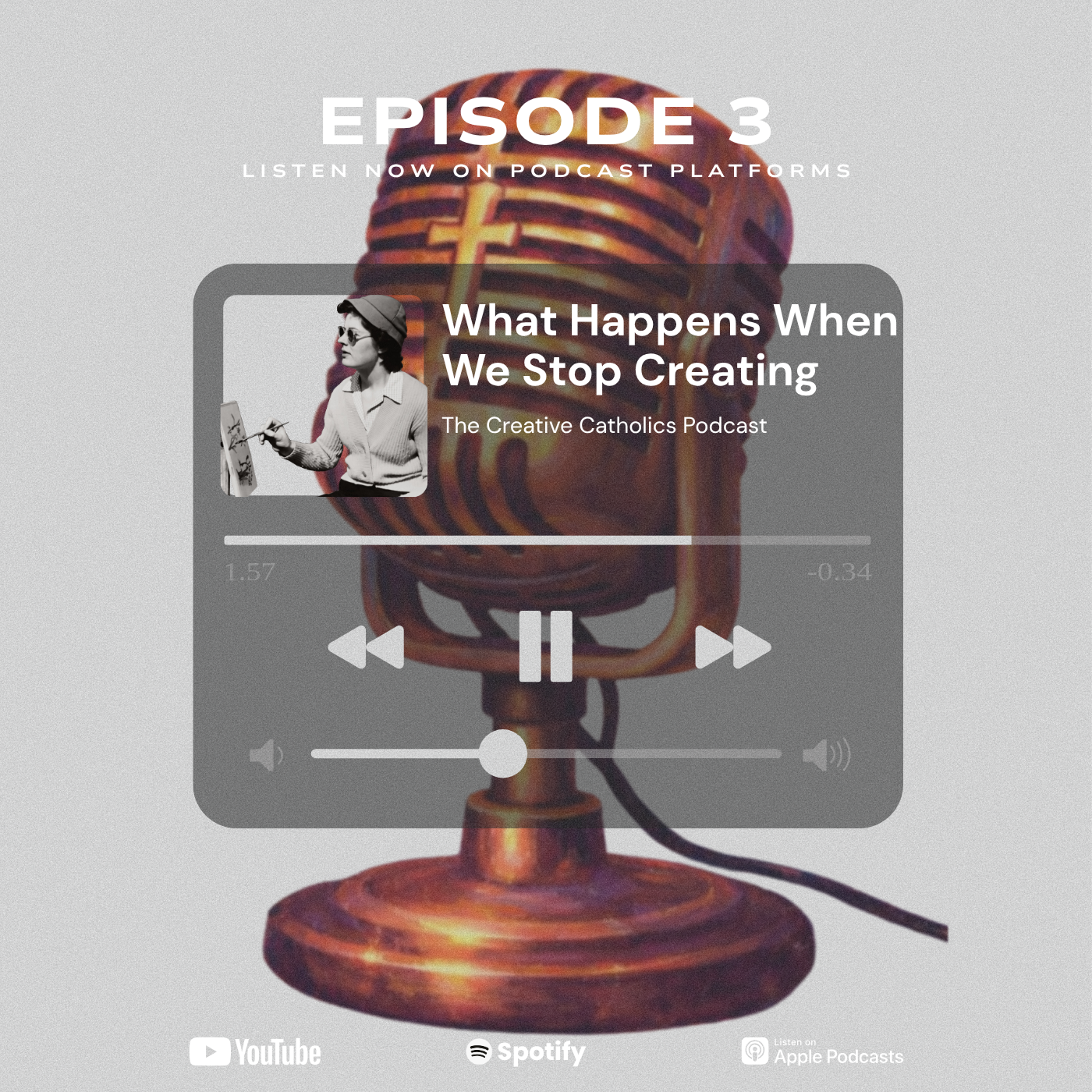
What happens to the soul when we stop creating?
Not professionally. Not perfectly. But in ordinary life — when we stop gardening, sewing, repairing, writing, baking, building, crafting, or making things slowly with our own hands.
In this episode of The Creative Catholics Podcast, Alex reflects on creativity, embodiment, craftsmanship, Catholic culture, and the hidden spiritual cost of becoming passive consumers instead of active participants in creation.
This episode explores why so many people today feel mentally exhausted, spiritually restless, creatively numb, and disconnected from their own lives — not necessarily because we are overworked, but because we have slowly stopped participating.
From Participation to Performance
Drawing from her background in theatre and performance studies, Alex reflects on the modern culture of visibility and performance shaped by social media.
So much of life today feels curated, observed, and presented for an audience. Modern culture increasingly asks:
How does your life appear?
But Christianity asks something radically different:
Who are you becoming?
Alex explores how social media culture can subtly transform human life into performance instead of presence, and why the hidden life of Christ stands in such profound contrast to a culture obsessed with visibility, branding, and constant self-presentation.
Christ spent thirty hidden years in ordinary life:
working with His hands
living in relationship
practicing faithful presence
embracing hiddenness
And perhaps many modern Catholics are longing to recover that same groundedness again.
We Are Starving for Creation
One of the central ideas in this episode is the growing imbalance between consumption and creation.
We scroll endlessly.
We watch endlessly.
We consume content constantly.
But increasingly, many people rarely:
build
repair
write
cultivate
create patiently with their hands and bodies
Alex reflects on her own experience teaching theatre at university and the surprising exhaustion that came from teaching creativity without having space to create herself.
The episode explores the idea that:
human beings were made not merely to observe creation, but to participate in it.
And perhaps part of modern anxiety, distraction, and spiritual fatigue comes from losing touch with this deeply human act of participation.
The Hidden Spiritual Power of Making Things
Why do gardening, knitting, baking bread, woodworking, painting, and slow creative work feel so calming to the human soul?
This episode explores the deeply incarnational nature of Christianity:
God entered physical reality
Christ worked with human hands
holiness happens in ordinary embodied life
the spiritual life is not escape from physical reality, but sanctification of it
Alex reflects on how creative work teaches:
patience
attentiveness
humility
surrender to process
faithful repetition
And in a culture obsessed with speed, algorithms, instant results, and productivity, craftsmanship becomes a quiet act of resistance.
You Are God’s Workmanship
A major theme of the episode centers around Ephesians 2:10:
“For we are God’s workmanship…”
Alex explores the Greek word poema — the root of the words poem and poetry — reflecting on the idea that every human being is intentionally crafted by God like a work of art.
The episode meditates on:
God as the master craftsman
human beings as works in progress
holiness as slow formation
the beauty of unfinished masterpieces
why God does not abandon unfinished work
Using stories from art history — including reflections on Claude Monet and artistic process — Alex explores how artists often continue working on masterpieces long after others believe the work is “finished.”
And perhaps God works the same way with us.
Bread, Wine & the Spirituality of Slow Formation
One of the most powerful reflections in this episode centers around the Eucharist and the significance of bread and wine.
Neither bread nor wine exists instantly.
Both require:
cultivation
patience
waiting
transformation
human participation with creation
Alex reflects on why Christ chose these slow, cultivated things for the Eucharist — and what that reveals about spiritual formation itself.
Holiness is rarely instantaneous.
Nearly everything sacred grows slowly.
This section of the episode explores:
Catholic craftsmanship
embodiment and faith
sacramental imagination
patience and formation
the hidden life
ordinary holiness
Creativity as Participation in God’s Nature
The episode also explores the connection between creativity and being made in the image of God.
The very first thing Scripture reveals about God is that:
God creates.
Alex reflects on Exodus 31 and the story of Bezalel — the first person in Scripture specifically described as being filled with the Holy Spirit:
an artist and craftsman.
This powerful biblical image reveals something deeply important:
craftsmanship matters to God.
Creativity is not simply self-expression.
It is participation with the Creator Himself.
The episode explores:
Catholic creativity
faith and craftsmanship
creating with God
beauty and vocation
creativity in ordinary life
Catholic creative living
The Hidden Life Builds What Lasts
Modern culture often encourages people to build their lives around visibility, metrics, relevance, and performance.
But the hidden life builds something deeper:
character
wisdom
craftsmanship
attentiveness
faithfulness
patience
interior depth
Alex reflects on the words of St. Francis de Sales:
“Be who you are and be that well…”
And explores the idea that God does not mass produce souls.
He forms them carefully, patiently, and personally like a craftsman shaping a masterpiece.
A Quiet Invitation to Create Again
Ultimately, this episode is not about becoming more productive or impressive.
It is an invitation to participate again.
To:
make something
tend something
build something slowly
create beauty quietly
use your hands again
inhabit your own life more fully
Whether through gardening, knitting, watercolor, woodworking, cooking, writing, homemaking, reading aloud, or creating family traditions, Alex reflects on how small acts of faithful creation help human beings recover rootedness, embodiment, attentiveness, and wonder.
Because perhaps creativity matters spiritually more than we realize.
In This Episode
Catholic creativity and faith
The hidden life and ordinary holiness
Social media and performative culture
Creativity vs consumption
Embodiment and the spiritual life
God as master craftsman
Ephesians 2:10 and poema
Catholic craftsmanship and beauty
The Eucharist and slow formation
Bread, wine, and human participation
Why creating things heals the soul
Hidden work and faithful presence
Participating in creation with God
Catholic slow living and attentiveness
Creativity as a path to holiness
Episode Timestamps
00:00 — Introduction: What happens when human beings stop making things?
02:34 — Social media, performance, and the hidden life
03:39 — Mental exhaustion and the loss of embodied creation
05:58 — Watching other people live instead of participating in our own lives
07:19 — Why gardening, baking, and making things calm the soul
08:30 — “You are God’s workmanship” — Ephesians 2:10 and poema
10:55 — God as artist and human beings as unfinished masterpieces
12:07 — How creativity forms the soul
14:32 — The hidden life vs modern productivity culture
16:11 — Catholic craftsmanship, bread, wine, and the Eucharist
19:24 — Bezalel, Exodus 31, and creativity filled with the Holy Spirit
21:49 — St. Francis de Sales and God as the master craftsman
23:05 — A quiet invitation to create again
24:14 — Final reflections: keep making what matters most
Mentioned in This Episode
Richard Schechner
Claude Monet
St. Francis de Sales
Ephesians 2:10
Philippians 1:6
Exodus 31
Bezalel
Riverside.fm
Marie Miller
Sponsors/Links
Intro/outro music by Marie Miller
This episode is sponsored by Riverside
Enter the Launch Giveaway 25 May – 1 June 2026
Follow @TheCreativeCatholics on Instagram to share your creations and join the community.
Share This Episode
If this episode encouraged you, please share it with a friend, leave a review, and subscribe to The Creative Catholics Podcast.
A Catholic podcast exploring creativity, faith, vocation, and the hidden life.